
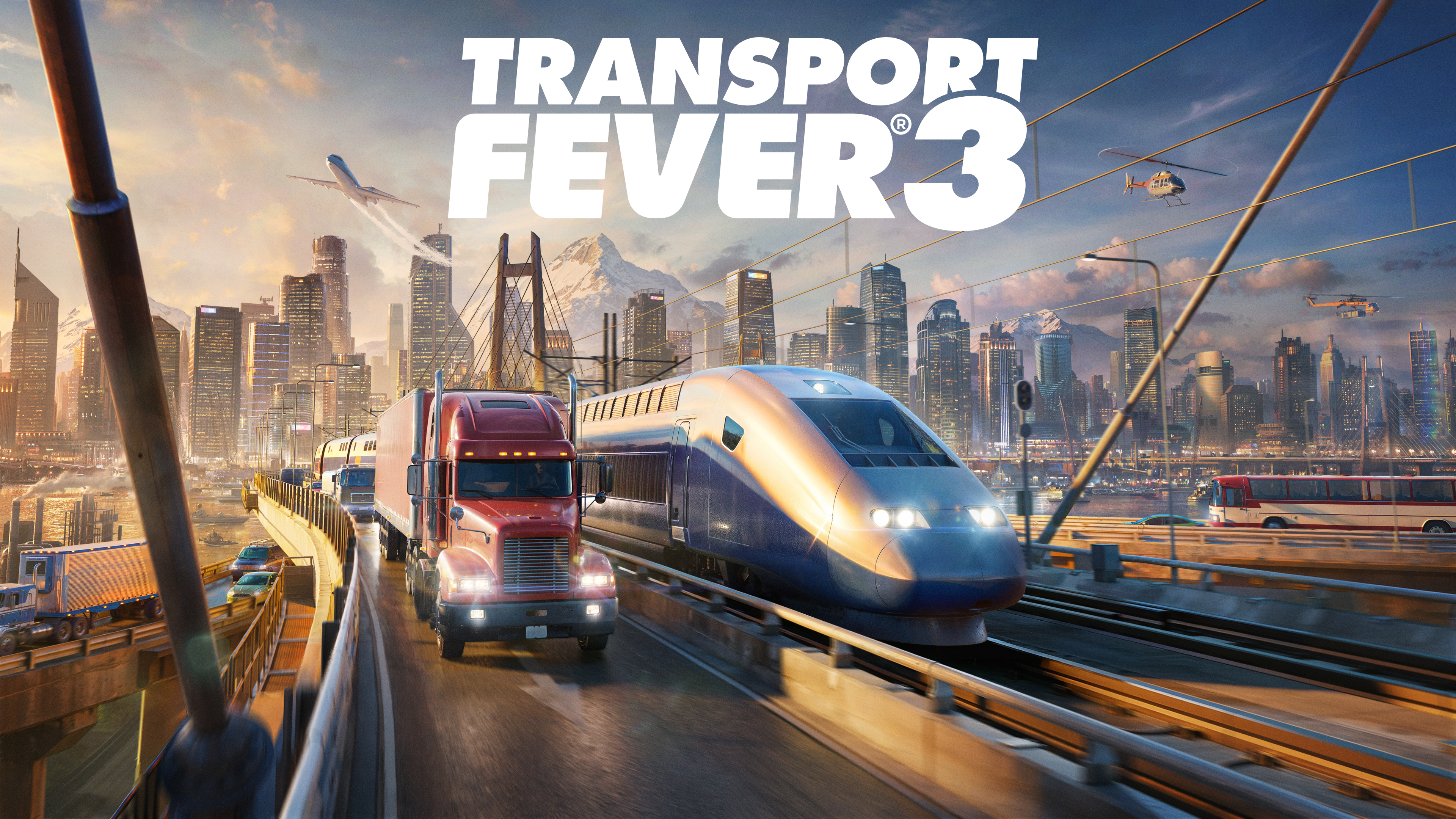
To finish out a very successful 2025, leading up to the release of Transport Fever 3, the ultimate transport tycoon simulator, Urban Games has just released the third episode of their “First Look” series. Transport Fever 3 will be available for PC, PlayStation 5, and Xbox Series X|S in 2026.
Transport Fever 3 raises the bar for transport simulation with a complete overhaul of traffic systems, infrastructure tools, and traffic management, introducing some of the most-requested community features from its predecessor. From advanced traffic tools to deeper urban mechanics, every system works together to create the most responsive and rewarding Transport Fever experience yet.
At the heart of the game lies a vastly improved traffic simulation. Vehicles respond more effectively to their surroundings, changing lanes, overtaking slower traffic, and dynamically selecting the fastest routes. To support this, road construction tools have been completely rebuilt. Create intersections at any angle, design complex junctions with realistic road markings, and fine-tune traffic with full lane controls, pedestrian crossings, and movable traffic lights, elevating the game’s traffic simulation.
Urban Games showed off the ways the cargo system is being upgraded in “First Look: Episode 2,” and this new episode goes into the same depth on the subject of passenger transport. Citizens have a preferred maximum travel time and become unhappy if their travel time is too long, which affects your reputation with the city and its growth. Additionally, comfort is an important consideration, as it makes citizens more patient if provided adequately.
Stations have been completely reworked and are fully modular. Specialist add-ons increase capacity, improve comfort, and extend reach, directly impacting passenger happiness and town growth. Growth, however, comes with consequences: expanded infrastructure increases noise and pollution, forcing players to balance progress with livability. Rail systems now feature three different track types, each with unique speed, cost, and pollution characteristics. There is no universal “best” option, players’ strategy will depend on choosing the right track for each line, service and situation. Advanced signalling and train priority controls ensure express services operate at maximum speed, even on busy networks.
In order to support the overhauled city-growth mechanics, trams are massively expanded, with dedicated tracks, flexible lane usage, underground construction options, cargo tram support, and seamless integration with traditional rail as light rail systems. Used well, they dramatically reduce road traffic while keeping citizens moving efficiently, especially when combined with train infrastructure.
Environmental impact matters more than ever. Noise barriers, tree-lined avenues, and smart routing help counter pollution, but there is no single solution to fulfill all city needs. Only careful implementation, smart planning and compromise will ensure minimal consequences.
Keeping everything running smoothly requires proper maintenance. Vehicles degrade over time and while historically, maintenance was solely about costs, poorly maintained vehicles now have actual impact. Not looking after your vehicles causes them to lose speed, comfort, and efficiency, while increasing noise and pollution. Advanced waypointing makes vehicle routing much more flexible. Eliminate noise pollution, take in the sights or simply avoid heavy traffic areas. Aircraft routes can now also be customized giving unparalleled control over players’ airways.
Take a look at this new trailer and then tell us what you think. Will you pick up Transport Fever 3 when it arrives in 2026?
[sc name=”game_details”]



Leave a Reply